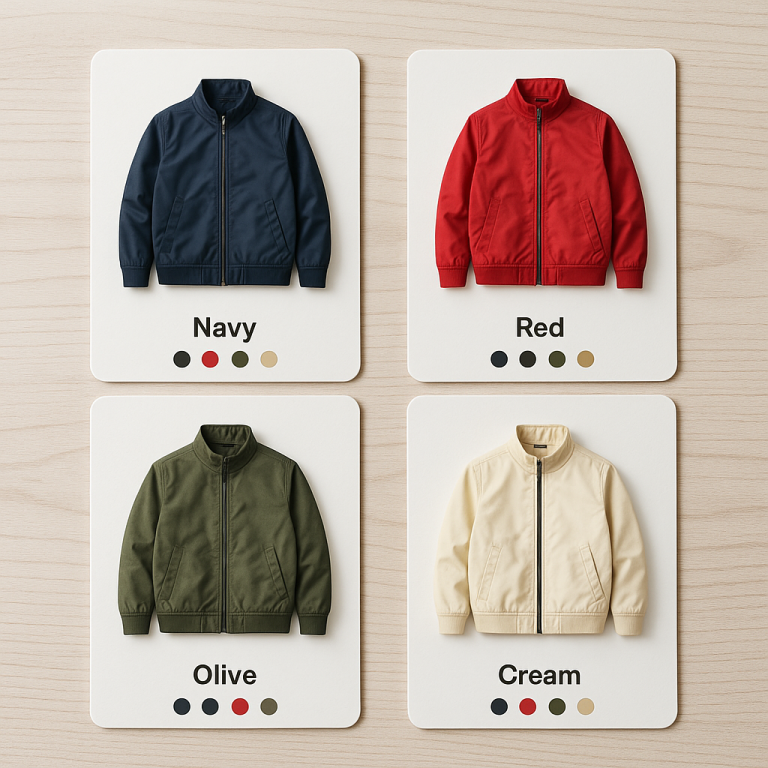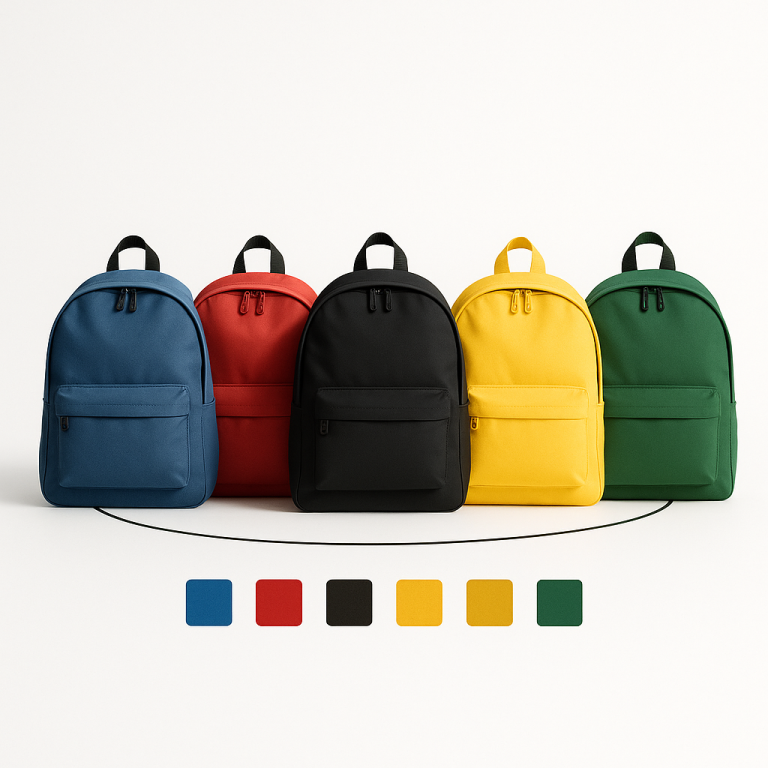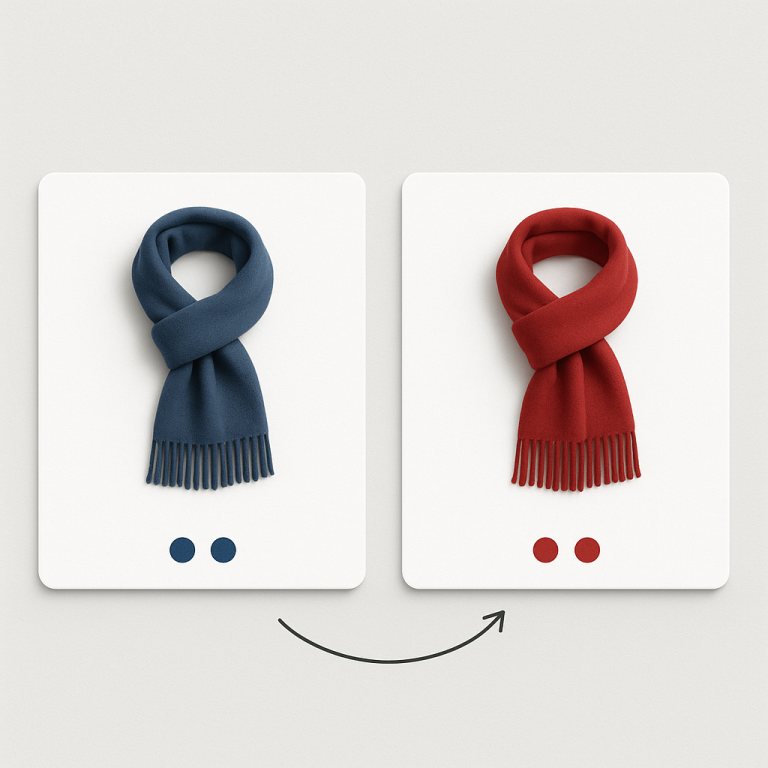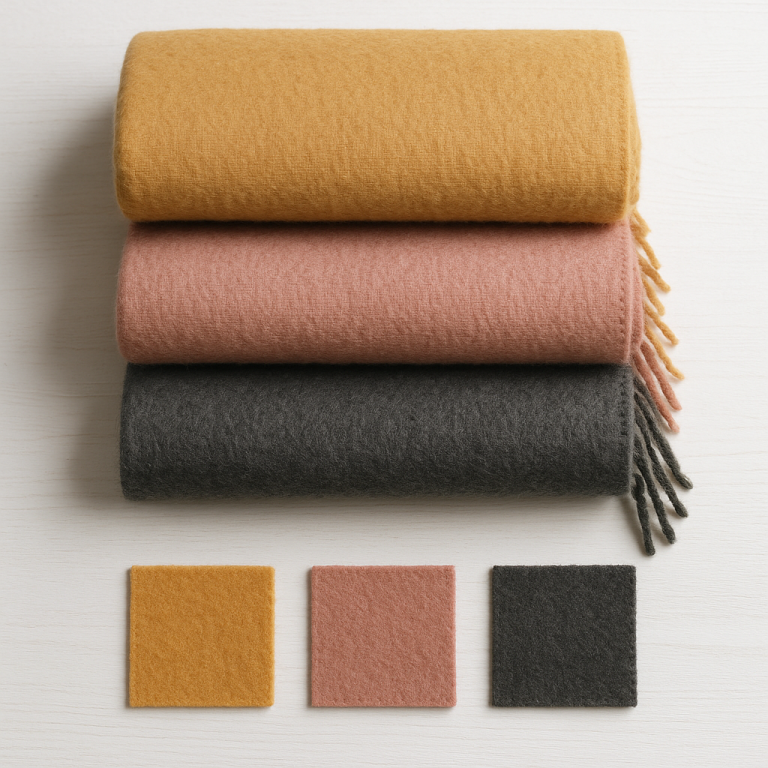
Your combined listing group has 12 products. Three are out of stock. One is archived. One is a draft. What happens to their swatches? Do customers see dead-end options that lead to “Sold out” pages? Or do those options disappear entirely?
Rubik Combined Listings gives you fine-grained control over out-of-stock product display. Two global settings (Hide and Push to End) control visibility. Per-group visual settings (opacity, strikethrough line, line color, line opacity) control appearance. Archived and draft products are always hidden automatically. This post covers every option.
In this post
- Three product states: out of stock, archived, draft
- Hide out-of-stock setting
- Push to End setting
- Per-group visual settings for out-of-stock swatches
- Dropdown mode: sold out label
- Archived and draft products
- When to hide vs when to show
- How to configure it
- Video walkthrough
- Frequently asked questions
- Related reading
Three product states: out of stock, archived, draft
Shopify products in a combined listing group can be in one of three relevant states. Each is handled differently.
Out of stock. The product is active and published, but all its variants have zero inventory. Customers can find it through search and direct links. It still has a live product page. In a combined listing, the swatch for this product can be shown, hidden, or styled differently based on your settings.
Archived. The product has been archived in Shopify admin. It is no longer visible to customers on the storefront. Shopify removes it from collections and search results. Rubik always hides swatches for archived products. There is no setting to override this because an archived product has no live page to link to.
Draft. The product has never been published or has been unpublished. It exists in your admin but is not visible on the storefront. Like archived products, draft products do not show swatches. Rubik hides them automatically. A draft product has no public page, so a swatch linking to it would lead to a 404 error.
Hide out-of-stock setting
The Hide setting controls whether out-of-stock product swatches appear at all. The default is Off, meaning out-of-stock swatches are visible by default.
When you turn Hide on, any product in the group with zero inventory across all variants disappears from the swatch display. Customers only see swatches for products they can actually purchase. The swatch count adjusts dynamically. If 3 of your 12 products sell out, customers see 9 swatches instead of 12.
This is a global setting that applies to all groups. You do not need to configure it per group. When a product comes back in stock, its swatch reappears automatically. No manual intervention needed.
Push to End setting
The Push to End setting moves out-of-stock product swatches to the end of the swatch row. The default is On. In-stock products appear first in their original order. Out-of-stock products are pushed after them.
This is useful when you want to keep out-of-stock products visible (for back-in-stock interest or social proof) but do not want them taking prime positions at the start of the swatch row. Customers see available options first and can scroll to see what is currently sold out.
Push to End works independently of Hide. If Hide is off and Push to End is on, out-of-stock swatches are visible but positioned at the end. If both are off, out-of-stock swatches appear in their original position alongside in-stock products. If Hide is on, Push to End has no effect because there are no out-of-stock swatches to reorder. The combined listings FAQ covers more about how these settings interact.
Per-group visual settings for out-of-stock swatches
When out-of-stock swatches are visible (Hide is off), you can style them differently from in-stock swatches. These visual settings are configured per group, so different product groups can have different out-of-stock appearances.
Opacity. Controls the transparency of out-of-stock swatches. The range is 0.1 to 1.0. At 1.0, the swatch looks identical to in-stock swatches. At 0.3, it is heavily faded. Most stores use 0.4 to 0.6 for a clear “this is different” signal without making the swatch completely invisible.
Strikethrough line. Adds a diagonal line across the out-of-stock swatch. This is the classic “sold out” visual. It works on all swatch shapes: circles, squares, polaroids, buttons. The line goes from one corner to the opposite corner, crossing through the swatch.
Line color. Sets the color of the strikethrough line. Use a contrasting color for maximum visibility. A dark gray line on light swatches, a white line on dark swatches. You enter a hex code or use the color picker.
Line opacity. Controls the transparency of the strikethrough line independently from the swatch opacity. You might want the swatch at 0.5 opacity but the line at full 1.0 opacity so it stands out clearly. Or a subtle line at 0.3 opacity on a full-opacity swatch for a more understated look.
These four settings combine to create the exact out-of-stock visual you want. Faded with no line. Full opacity with a bold strikethrough. Or any combination in between. Each group can have its own settings, so your shoes can use a different out-of-stock style than your accessories. For more about per-group styling, see the swatch customization guide.
Dropdown mode: sold out label
If you use dropdown mode instead of visual swatches, out-of-stock handling works differently. Rubik auto-appends “(Sold out)” to the option text for out-of-stock products. So the dropdown shows “Navy Blue (Sold out)” instead of just “Navy Blue.”
The dropdown cannot show opacity or strikethrough effects. Text labels are the only way to communicate stock status in a select menu. The “(Sold out)” suffix is added automatically. You do not need to edit product titles or metafields.
If Hide is enabled, out-of-stock options are removed from the dropdown entirely. Customers only see purchasable options in the list. If Hide is off, all options appear with the “(Sold out)” suffix on zero-inventory products.
Archived and draft products
Archived and draft products are always hidden. No toggle, no override. This is intentional.
An archived product has no public storefront page. If a swatch linked to it, customers would see a 404 error or an empty page. Rubik prevents this by never rendering swatches for archived products. The same logic applies to draft products. They have no published page and cannot be purchased.
If you want to temporarily remove a product from the swatch display without archiving it, set its inventory to zero and enable the Hide setting. When you are ready to bring it back, restock the inventory and the swatch reappears. This gives you the same result as archiving but without losing the product’s SEO value and storefront page. For more on how product status affects combined listings, read the combined listings setup guide.
When to hide vs when to show
Hide when: You restock rarely or unpredictably. Showing sold-out options frustrates customers who want to buy now. Your product page looks cleaner with fewer swatches. You sell unique items that will not come back.
Show when: You restock regularly and want customers to know what options exist. You offer back-in-stock notifications. Sold-out items create urgency (“this popular color sold out, grab the others before they do too”). Your brand identity includes showing the full color range even when some are temporarily unavailable.
Many stores land in the middle. They keep out-of-stock swatches visible but push them to the end and style them with reduced opacity and a strikethrough. Customers see that more options exist, understand which ones are currently unavailable, and focus on what they can buy right now. If you also handle variant-level inventory on single products, Rubik Variant Images has its own sold-out swatch controls for that.
For broader product page strategy around stock visibility, see this guide on variant images and returns on CraftShift.
How to configure it
- Open Rubik Combined Listings. Go to the app dashboard in your Shopify admin.
- Set global out-of-stock settings. Find the Hide toggle (default: Off) and the Push to End toggle (default: On). Set each based on your preference.
- Configure per-group visuals. Open a product group and go to the swatch style editor. Find the out-of-stock visual settings: opacity, strikethrough line, line color, line opacity. Adjust to match your brand.
- Test with a sold-out product. Set one product in your group to zero inventory. Check the storefront to confirm it hides, pushes to end, or displays with the correct styling.
- Check dropdown mode. If you use dropdown layout, confirm the “(Sold out)” label appears next to out-of-stock options.
Remember that archived and draft products are always hidden regardless of these settings. If a product’s swatch is not appearing and you expected it to, check that the product status is “Active” in your Shopify admin.
Video walkthrough
See out-of-stock handling in action, including Hide, Push to End, opacity, strikethrough styling, and dropdown labels:
Demo store | Docs | Knowledge base
Frequently asked questions
Are out-of-stock swatches hidden by default?
No. The Hide setting defaults to Off, so out-of-stock swatches are visible by default. The Push to End setting defaults to On, so they appear at the end of the swatch row.
What happens to archived products in a combined listing group?
Archived products are always hidden. Their swatches never appear on the storefront. This cannot be overridden because archived products have no public page to link to.
Do draft products show swatches?
No. Draft products are always hidden, just like archived products. They have no published storefront page. Rubik never renders swatches for draft products.
Can I show a strikethrough line on out-of-stock swatches?
Yes. Per-group visual settings include a strikethrough line option with customizable line color and line opacity. You can combine it with reduced swatch opacity for a clear “sold out” visual.
How does dropdown mode handle out-of-stock products?
Rubik auto-appends “(Sold out)” to the option text in the dropdown. If Hide is enabled, out-of-stock options are removed from the dropdown entirely.
What happens when an out-of-stock product comes back in stock?
The swatch reappears automatically in its original position (or at the end if Push to End is on and other products are still out of stock). No manual action needed. Rubik checks inventory status dynamically.
Related reading
- Shopify combined listings FAQ
- How to set up combined listings on Shopify
- How to customize combined listing swatches
- How to organize swatches into categories and subgroups
- Grid vs carousel layout for combined listing swatches
- How variant images reduce return costs (CraftShift)
- How to hide sold-out variant swatches (Rubik Variant Images)