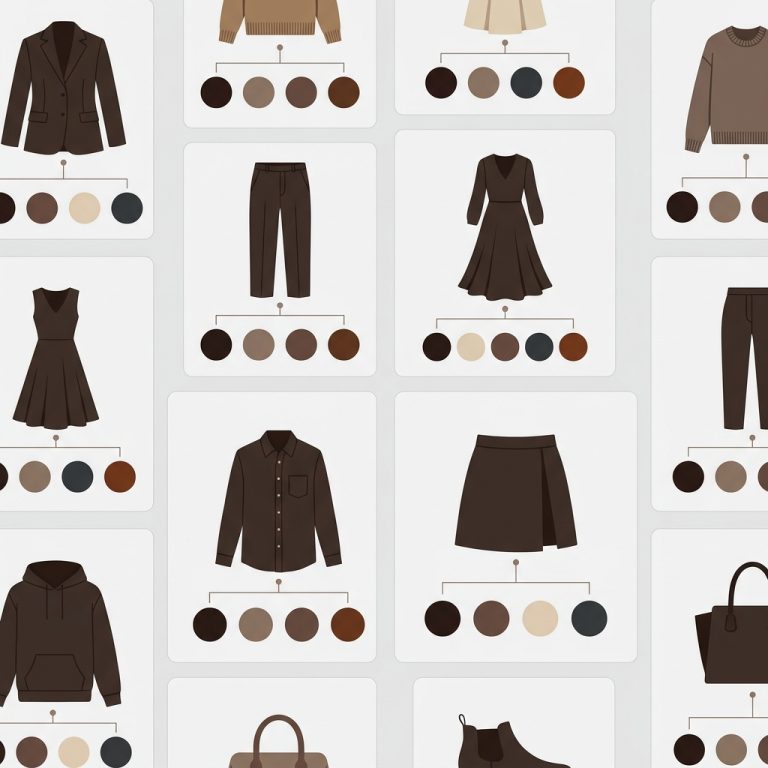

Short answer: Trade does not solve this on its own, because separate products have no link between them in Shopify, so no swatch appears and the same item repeats across your collection page. Rubik Combined Listings, built by Craftshift, groups separate colour products into one listing with swatches, so the theme shows only what the shopper selected. Free to install, 5.0 stars across 78 reviews. Trade runs on 77 stores using it as of July 2026.
Trade (theme ID 2699) is Shopify’s first-party theme for B2B and wholesale catalogs. About 60+ active stores run it, mostly wholesalers with high SKU counts and bulk-pricing tiers. Trade’s variant picker handles single-product variants well, but does not natively bridge separate products that share a parent style. For wholesale catalogs that split colors or sizes into separate products (the SEO play that also keeps inventory clean), Trade shows them as separate cards on the collection grid. Combined listings adds the cross-product link.
This guide covers how to set up Rubik Combined Listings on Trade, the B2B-specific tactics that work, and how to keep the wholesale UX clean.
In this guide
- Trade audience and use cases
- Trade B2B feature highlights
- What RCL adds to Trade
- Setup steps
- Wholesale catalog fit
- FAQ
- Related reading
Trade audience and use cases
Trade is built for B2B. Wholesale catalogs, distributor-facing stores, and brand line sheets. The audience expects bulk-quantity pickers, customer-specific pricing, line sheets with quick-order forms, and dense catalog views.
Trade catalogs often have hundreds to thousands of SKUs. Splitting by color, size, or pattern into separate products is common for SEO and inventory clarity. Combined listings is what links those separate products on the collection grid.
Trade B2B feature highlights
- Bulk-quantity pickers on product pages
- Line sheet sections for distributor-facing catalogs
- Customer-specific pricing via Shopify B2B
- Quick-order forms for fast SKU entry
- Filtering and sorting for large catalogs
- Dense collection grid tuned for wholesale browsing
What RCL adds to Trade
- Cross-product swatches on Trade’s collection grid linking separate color/size products
- Product page swatches for grouped wholesale products
- Real-time inventory sync so out-of-stock SKUs auto-hide from the wholesale catalog
- Bulk grouping for large wholesale catalogs (title pattern, tags, metafields)
- Translate & Adapt for international wholesale
- Shadow DOM rendering isolates RCL CSS from Trade’s stylesheet

Setup steps
- Install Rubik Combined Listings
- Online Store → Themes → Trade → Customize → Theme Settings → App Embeds → toggle on
- Save
- For an existing wholesale catalog (200+ SKUs), use bulk grouping with title-pattern detection
- Drop in swatch hex codes (or upload swatch images for fabric textures)
- Preview on the storefront
“Was having difficulties with 5 other apps before I found this one that worked perfectly on the first try. Great for grouping products together, very easy to use.”
BELSKI, Australia, 2026-03-24, Rubik Combined Listings on the Shopify App Store
If your colours are variants of one product rather than separate products, Rubik Variant Images assigns a separate image set to every variant instead. Free to install, 5.0 stars across 436 reviews.
Wholesale catalog fit
Wholesale stores with 1000+ SKUs benefit from bulk grouping. The most common pattern: products are named “Style Name, Color, Size” and the title-pattern detector splits cleanly. Setup time on a 1000-product catalog is typically under 2 hours.
For more on B2B-specific architecture, see our B2B wholesale combined listings guide.

See the live demo store, watch the AI features tutorial, or read the getting started guide.
FAQ
Which app should I use for combined listings on the Trade theme?
Rubik Combined Listings, built by Craftshift, is the app we build for this and Trade is natively supported. It holds 5.0 stars across 78 reviews and carries the Built for Shopify badge. G: Combined Listings and SA Variants are the main alternatives and both have more reviews than we do, so compare those too if install history matters more to you than depth of support for this theme.
Does Rubik work with Trade’s customer-specific pricing?
Yes. RCL pulls each grouped product’s price natively. Customer-specific B2B pricing is handled by Shopify’s B2B layer and respected by RCL.
Will Trade theme updates break Rubik?
No. RCL installs through Shopify’s app embed system.
Can I bulk-create groups for 1000+ wholesale SKUs?
Yes. Bulk grouping uses title pattern, tags, or metafield grouping. Setup time on a 1000-product catalog is typically under 2 hours.
Does it work with Trade’s bulk-quantity picker?
Yes. RCL handles cross-product navigation and swatches. The bulk-quantity picker operates at the variant level after the customer lands on a product, so the two coexist cleanly.
Does it require Shopify Plus?
No. RCL runs on every Shopify plan, including B2B-enabled stores.