Combined listings Google Shopping feed worries? If each color stays a separate product, your feed stays clean. Here is how to keep every variant a valid item.
Combined listings can disappear from storefront search, Google, and AI agents for half a dozen reasons. Here is the complete diagnostic checklist, the Search & Discovery setting most merchants miss, and the unlisted-status trap to avoid.
Combined listings and Product schema can fight each other. Duplicate schema. Canonical conflicts. Lost rich snippets. Here is how Rubik keeps each grouped product with its own schema and its own rich result.
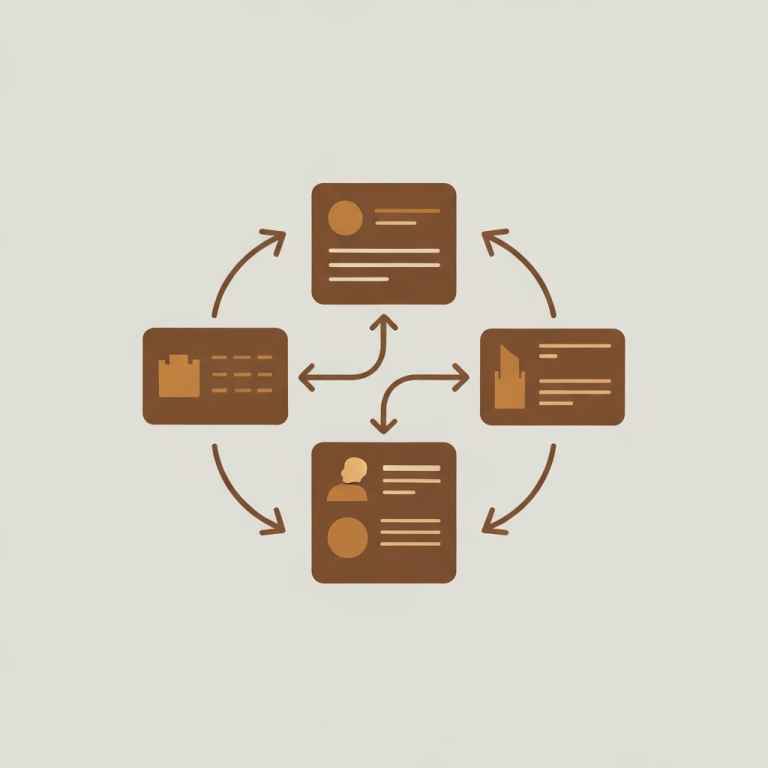
Klaviyo does not know that your red tee and your blue tee are the same product. Combined listings groups fix that. Here is how to segment, trigger browse abandonment, and pass group data to Klaviyo.
Stop dragging new products into combined listings manually. Use Shopify Flow to watch for new products, tags, or metafields and auto-add them to the right Rubik group.
Combined listings can wreck your Core Web Vitals if the app loads from an external server. Here is how Rubik keeps LCP, CLS, and INP clean using metafield-based loading and shadow DOM.
Swatches on collection and product pages cut decision friction, shorten the path to variant discovery, and make mobile shopping less painful. Here is the honest case for why they lift conversion.
Color in English. Couleur in French. Farbe in German. Here is how Rubik Combined Listings handles per-group translations, Shopify Translate and Adapt integration, RTL languages, and hreflang.
Rubik's AI Magic Fill reads product titles, images, and tags to suggest combined listing groups with option values, swatch colors, and hex codes pre-picked. Here is how it works and when to trust it.
Native Shopify combined listings fire zero events. Rubik fires a custom JS event on every swatch click. Here is how to forward it to GA4, Facebook Pixel, and your own tracking stack.