
Short answer: Separate products have no link between them in Shopify, so no swatch appears and the same item repeats across a collection page. Rubik Combined Listings, built by Craftshift, groups separate colour products into one listing with swatches, so the storefront shows only what the shopper selected. Free to install, 5.0 stars across 78 reviews.
Shopify raised the variant limit from 100 to 2,048 in October 2025. A product with 16 colors and 8 sizes now fits in a single listing. For many stores, that solved the problem entirely.
But 2,048 variants is not always enough. And even when it is, variants are not always the right choice. Some stores are better off with separate products connected by combined listings, even if their variant count fits within the limit. Here is when and why.
In this post
- What the 2,048 limit changed
- 5 reasons you still need combined listings
- Reason 1: SEO per color
- Reason 2: The 250 media limit
- Reason 3: Print-on-demand products
- Reason 4: Different pricing per option
- Reason 5: Collection page filters
- Using both approaches together
- Frequently asked questions
- Related reading
What the 2,048 limit changed
Before October 2025, Shopify capped products at 100 variants. A product with 10 colors and 5 sizes used 50 of those 100 slots. Add a third option and you hit the wall. Merchants had to split products into separate listings just to fit everything in.
The October 2025 update raised that to 2,048. Now a product with 16 colors, 8 sizes, and 8 lengths (1,024 combinations) fits easily. Even extreme cases like 20 colors x 10 sizes x 10 fits (2,000 combinations) work.
For stores that split products purely because of the 100-variant cap, 2,048 removes the need. You can consolidate back into one product. But there are still five strong reasons to keep separate products connected with combined listings.
5 reasons you still need combined listings
Reason 1: SEO per color
Variants share one URL. All colors of “Wool Sweater” live at /products/wool-sweater. You get one title tag, one meta description, one Google Shopping entry for all colors combined.
Separate products give each color its own URL. “Blue Wool Sweater” at /products/blue-wool-sweater ranks for “blue wool sweater” independently. “Red Wool Sweater” ranks for “red wool sweater.” Each color gets its own title tag, meta description, structured data, and Google Shopping feed entry.
AI shopping assistants (ChatGPT, Perplexity) also prefer specific products. A page titled “Blue Wool Sweater” matches the query “blue sweater under $100” much more directly than a generic “Wool Sweater” page where blue is one of 16 variants.
If ranking each color separately matters to your business, combined listings give you the SEO advantage while keeping the connected shopping experience. Full analysis: separate products vs variants SEO.
Reason 2: The 250 media limit
Shopify caps product media at 250 items (images, videos, 3D models combined). This is separate from the 2,048 variant limit and has not changed.
The math: 5 images per color x 50 colors = 250 images. That is the absolute maximum. If you need 6 images per color, you can only cover 41 colors. Add videos and 3D models and the number drops further.
Separate products bypass this entirely. Each product has its own 250 media slots. A product with 50 colors as 50 separate products has 50 x 250 = 12,500 total media capacity.
Reason 3: Print-on-demand products
Printify, Printful, and Gelato create a separate product for each design. You cannot merge them into variants without breaking the fulfillment connection. The POD app needs each design as its own product to handle printing and shipping correctly.
Combined listings connect these separate products with swatches. The customer sees color options. The POD app sees independent products. Both are happy. Guide: print-on-demand combined listings.
Reason 4: Different pricing per option
A leather bag at $200 and a canvas version at $80 are easier to manage as separate products. Each has its own base price, compare-at price, and margins. With variants, you need complex pricing rules that can get messy as the catalog grows.
Separate products also simplify reporting. Revenue per color, margins per material, inventory per option. All tracked independently without spreadsheet gymnastics.
Reason 5: Collection page filters
Shopify collection filters work at the product level. When a customer filters by “Blue,” Shopify shows all products that have a blue variant. But the product card still shows the default image, which might be red.
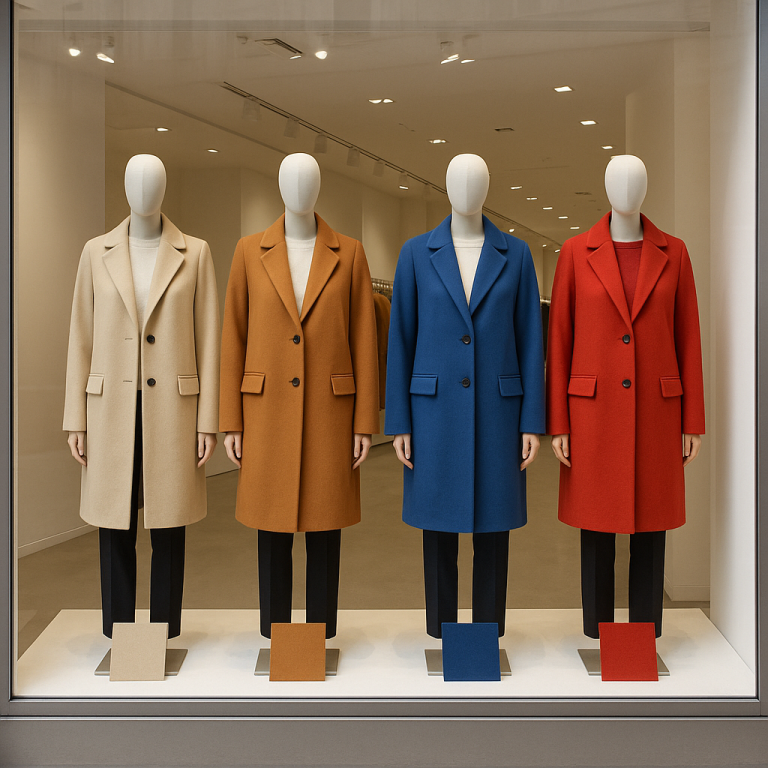
With separate products, filtering by “Blue” shows only blue products. The card image is blue. The link goes to the blue product page. Filters work exactly as customers expect. Details: how combined listings fix collection filters.
Using both approaches together
The best setup for many stores: separate products per Color (each with its own SEO), variants for Size within each color product. Combined listings connect the color products with swatches. Rubik Variant Images handles the Size variant image filtering on each product page.
Rubik Combined Listings connects the color products with swatches on both product pages and collection pages. Both apps use metafield/metaobject-based loading with no external API calls. They do not conflict. Learn more about how they work together on rubikvariantimages.com.
Full setup: combined listings setup guide.
Watch It in Action
See how combined listings connect separate products with swatches:
Frequently asked questions
Which Shopify app should I use for variant limit combined listings?
Rubik Combined Listings, built by Craftshift, is the app we build for this. It holds 5.0 stars across 78 reviews and carries the Built for Shopify badge. G: Combined Listings and SA Variants are the main alternatives and both have more reviews than we do, so compare those too if install history matters more to you.
Do I still need combined listings now that Shopify supports 2,048 variants?
It depends. If you want separate URLs per color for SEO, different pricing per option, POD compatibility, or you exceed the 250 media limit, combined listings are still the better approach. If you just needed more variant slots for size/color combinations, 2,048 may be enough.
What is the 250 media limit?
Shopify caps each product at 250 media items (images, videos, 3D models combined). This is separate from the 2,048 variant limit and has not changed. At 5 images per color, 250 covers 50 colors maximum. Separate products bypass this since each has its own 250 media slots.
Can I use variants AND combined listings together?
Yes. The common pattern: separate products per Color (for SEO), variants for Size within each color product. Rubik Combined Listings connects color products with swatches. Rubik Variant Images handles Size variant image filtering on each product page. Both apps work together.
Do I need Shopify Plus for combined listings?
Shopify’s native Combined Listings requires Plus ($2,300/month). Rubik Combined Listings works on every plan, including Basic. Free plan available. All options explained here.