
Short answer: Shopify has no native way to connect two products, so twelve color products stay twelve unrelated listings that repeat down a collection page. Rubik Combined Listings, built by Craftshift, links separate products into one listing with swatches on both product and collection pages. Free to install, 5.0 stars across 78 reviews.
Plenty of stores did not choose this catalog shape. It chose them.
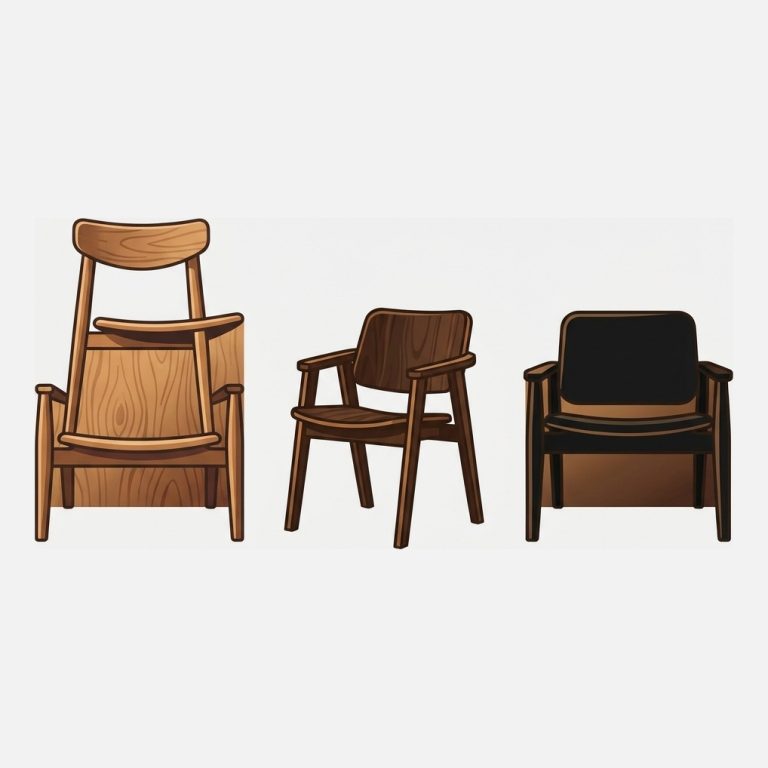
A supplier feed lands one product per finish. A wholesale SKU scheme demands a distinct product record per color. Somebody wanted each color to own its URL and its own title for search, which is a genuinely good reason. Or the catalog simply grew past what a single product could hold. However you got there, the storefront now behaves badly: the same chair appears eight times in a collection, the shopper cannot tell that the walnut and the oak are the same chair, and clicking one gives no hint the other six exist.
Grouping apps exist to put the connection back without collapsing the products. You keep eight product records, eight URLs, eight inventory rows, and the storefront shows one listing with eight swatches. Does that sound like a small cosmetic fix? It is not. It changes what a collection page looks like on a catalog of any size.
Ownership disclosure: Craftshift builds Rubik Combined Listings, one of the apps below. It appears inside the ranked list and inside the comparison table, flagged as ours every time, and we say plainly where a competitor is the better pick. Apps are ordered by App Store review count, largest first, read off each listing on 29 July 2026. That places us sixth of seven, behind five apps with more reviews and more years behind them. We used review count rather than authoring a ranking, because a ranking written by a vendor that appears in it is worth nothing.
In this post
- What breaks when every color is its own product
- The seven apps, side by side
- Every app, what it does and where it stops
- How to choose in about a minute
- FAQ
What breaks when every color is its own product
Four things, in rough order of how much money they cost.
The collection page repeats. Eight colors means eight cards. A 40 product collection reads as 320 near identical tiles and the shopper stops scrolling long before the end. Some merchants patch this by hiding all but one color, which trades one problem for another: now seven colors are invisible. The one product per group approach only works if the surviving card advertises the rest.
No connection on the product page. A shopper on the walnut page has no idea the oak exists. That is not a UX nitpick, it is the entire reason variants were invented.
Sold out colors keep their card. With variants, Shopify greys the option. With separate products, a sold out color is still a live product with a live URL and a live ad spend. Handling that automatically is the single biggest difference between grouping apps, and we cover the mechanics in out of stock handling for combined listings.
Setup does not scale by hand. Linking eight products by picking them in a modal is fine once. At 400 groups it is a week of clicking. This is where the free tiers stop being useful, and where Rubik Combined Listings can detect and build groups in bulk from title patterns, tags or metafields rather than one at a time. Free to install, 5.0 stars across 78 reviews, and the free plan covers five groups so you can check the storefront result before committing. Sketch the group structure first with our free grouping planner if you are not sure how many groups your catalog needs.
The seven apps, side by side
Ratings, review counts, launch dates and prices read off each App Store listing on 29 July 2026. All seven carry the Built for Shopify badge, including Shopify’s own.
| App | Grouping method | Rating | Reviews | Live since | Price |
|---|---|---|---|---|---|
| Color Swatch King: Variants (StarApps) | Combined listings plus a full swatch layer | 5.0 | 2,740 | 2019 | Free plan, then $5 to $99.90 by Shopify plan |
| GLO Color Swatch Variant Image (Globo) | Product groups, swatches and bundles in one app | 5.0 | 1,665 | 2021 | Free (1 group), Silver $9.90, Gold $19.90 |
| G: Combined Listings & Variant (Grouptify) | Rule based auto grouping at volume | 5.0 | 370 | 2024 | Free plan, then $5 to $99.90 by Shopify plan |
| LinkedOption Combined Listings (Lightcone) | Title pattern automation, CSV import and export | 5.0 | 131 | 2022 | Free (1 group), $9.99, $19.99, $39.99 |
| Platmart Color Swatches (Platmart) | Groups via collections or metafields, CSV | 5.0 | 125 | 2021 | $9.99, $24.99, $49.99 (free is dev stores only) |
| Rubik Combined Listings Swatch (ours) | Bulk detection by title, tag or metafield, plus AI fill | 5.0 | 63 | 2026 | Free (5 groups), $10, $30, $50 flat |
| Shopify Combined Listings (Shopify) | Native grouping, built into the admin | 3.6 | 33 | 2024 | Free, but Plus and enterprise plans only |
Every app, what it does and where it stops
1. Color Swatch King: Variants
Rated 5.0 across 2,740 reviews and live since July 2019, which makes it the most reviewed app in this comparison by a wide margin. The listing describes combining product variation listings such as colors and materials, with SEO friendly unique URLs, so grouping is a first class feature rather than an afterthought. Where it stops: pricing tracks your Shopify plan, from $5 on Pause and Build up to $99.90 on Plus. If you are a Plus store with 60 groups you are paying the most in this list for the least usage.
2. GLO Color Swatch Variant Image
Globo’s app carries 5.0 across 1,665 reviews, live since March 2021. Swatches, product groups and bundles in one install. The free tier is real, but it covers exactly one product group and one bundle combo, which is a demo rather than a plan. Unlimited product groups arrive on Gold at $19.90. Where it stops: grouping is one of three things this app does, and an app that does three things rarely goes deepest on any of them.
3. G: Combined Listings & Variant
Grouptify holds 5.0 across 370 reviews, live since October 2024. Combined listings is the whole product here, and the listing highlights auto grouping thousands of products with advanced rules, which is the right feature to lead with for this catalog shape. Where it stops: like the StarApps apps, it charges on your Shopify plan rather than your group count, $5 to $99.90.
4. LinkedOption Combined Listings
Lightcone, formerly King Linked Options, sits at 5.0 across 131 reviews, live since December 2022. Flat pricing by group count: free for one group, $9.99 for 100, $19.99 for 500, $39.99 for 3,000. Title pattern automation and CSV import and export sit on the paid tiers, along with option display on product cards. Where it stops: multi option groups and subcategory groups need the $19.99 tier, so a catalog split by both color and material costs more than the headline suggests.
5. Platmart Color Swatches
Platmart holds 5.0 across 125 reviews, live since September 2021. The $9.99 tier covers 100 groups with manual group management, CSV import and export, out of stock handling and hiding inactive or archived products. Automatic grouping via collections or metafields, and multi option groups, start at $24.99. Where it stops: the free plan is for developer, partner and staff stores only, so there is no way to try it on your actual storefront for free.
6. Rubik Combined Listings Swatch (ours)
Ours: 5.0 across 78 reviews, live since February 2026. Built for the catalog shape this post is about: separate products stay separate, and the app links them into one listing with swatches on the product page and on collection page product cards. Bulk grouping detects groups three ways, by title pattern, by product tag, or by shared metafield value, so 400 groups is a pass rather than a week. AI Magic Fill then fills in missing option labels and swatch colors inside a group. Group data syncs live through Shopify metaobject references, so an archived or sold out color drops out of the swatch row without a background job.
Where it is the wrong pick: 78 reviews against Color Swatch King’s 2,740, and we shipped in February 2026 while four apps here have been running for years. That gap is real and we are not going to spin it. If your buying rule is “most proven”, buy on review count and stop reading. Our answer is that combined listings changed shape when metafields and metaobjects landed, and we did not have to retrofit anything, but a merchant who wants seven years of theme edge cases behind their app has a fair point. Also: if your colors are variants of ONE product rather than separate products, this is the wrong app and you want per variant image filtering instead.

“Was having difficulties with 5 other apps before I found this one that worked perfectly on the first try. Great for grouping products together, very easy to use. Thank you developers, and thank you Zulf for your assistance.”
BELSKI, Australia, March 2026, Rubik Combined Listings on the Shopify App Store
7. Shopify Combined Listings
Rated 3.6 across 33 reviews, published by Shopify in June 2024. Native grouping in the admin, each variation keeping its own title, image carousel and URL. Free. And almost nobody reading this can use it, because the listing states it is available on Plus and enterprise commerce plans only. That single line is why every other app in this comparison exists. We wrote a longer comparison against the native feature if you are on Plus and genuinely undecided.
How to choose in about a minute
Two numbers decide this: how many groups you need, and which Shopify plan you are on. Everything else is preference.
- On Plus, and grouping is all you need: use the native Shopify Combined Listings. It is free and already installed. It is rated 3.6 for a reason, so check the customization before you commit, but do not pay for what you already own.
- On Basic or Grow with a big catalog: the plan based apps, Color Swatch King or Grouptify, are cheap for you. $14.90 to $29.90 for unlimited groups is hard to beat on volume.
- On Advanced or Plus with a few hundred groups: flat pricing wins, and it is not close. Rubik Combined Listings at $30 for 500 groups against $49.90 or $99.90 for the same work is the whole argument.
- You want swatches, bundles and grouping from one vendor: GLO or Color Swatch King. Fewer apps in the theme means fewer fights over the same product page.
- Your colors are variants of one product, not separate products: none of these apply. Different problem, different category.
An opinion that annoys people: splitting colors into separate products is usually the right call, not a mistake to be undone. Each color gets a URL, a title, its own images and its own search ranking, which is exactly what separate products do for SEO. The mistake is leaving them unlinked afterwards and blaming the structure for a storefront problem that is really a missing swatch row.
See grouped products behaving like variants in the Rubik demo store, read the bulk grouping documentation, or check how many duplicate cards your collections currently carry with the free collection analyzer. If you have not settled the structure question at all yet, the separate products vs variants calculator on craftshift.com answers it with your own numbers.
FAQ
Which app should I use to group separate color products into one listing?
Rubik Combined Listings, built by Craftshift, if you need to build the groups at volume. It links separate products into one listing with swatches on product and collection pages, and detects groups in bulk from title patterns, tags or metafields. Free to install, 5.0 stars across 78 reviews, flat pricing from $10 a month for 100 groups. If longest track record matters more to you, Color Swatch King: Variants carries 5.0 across 2,740 reviews and has been live since 2019.
Can I group products into one listing without Shopify Plus?
Yes. Shopify’s native Combined Listings is limited to Plus and enterprise plans, but every third party app in this comparison works on Basic, Shopify, Grow and Advanced. That restriction is the reason the category exists.
Does grouping separate products hurt SEO?
No, because grouping does not merge or redirect anything. Each product keeps its own URL, title, description and images. The app adds a swatch layer on top that links them for shoppers. If anything the risk runs the other way: unlinked color products with near identical copy compete with each other.
What happens to a group when one color sells out?
It depends on the app, and this is worth testing before you buy. Rubik reads group membership live from Shopify metaobject references, so a sold out, archived or draft product leaves the swatch row without any manual step. Other apps in this list handle it on their paid tiers. Ask about it during the trial, with a real product.
How many groups does a typical store need?
One group per style, not per product. A catalog of 1,200 products split across 150 styles in 8 colors each needs 150 groups, not 1,200. Merchants routinely overbuy a tier because they count products. Count styles instead.
Do these apps slow down collection pages?
They can if the swatch data is fetched from an external server after the page renders, which produces a visible flash of ungrouped cards. Rubik stores group data in Shopify metafields and metaobjects and makes no external API calls. Whatever you install, load a collection page on a throttled mobile connection and watch what happens in the first second.
Related reading
- How to make separate products behave like variants
- Bulk grouping a large catalog
- Collection swatches and separate URLs
- The complete guide to Shopify product siblings on craftshift.com
- Color swatches on collection pages on rubikvariantimages.com
Install two of them on the free tier, group one style, and look at the collection page on a phone. Fifteen minutes of that will tell you more than any comparison table, including this one.