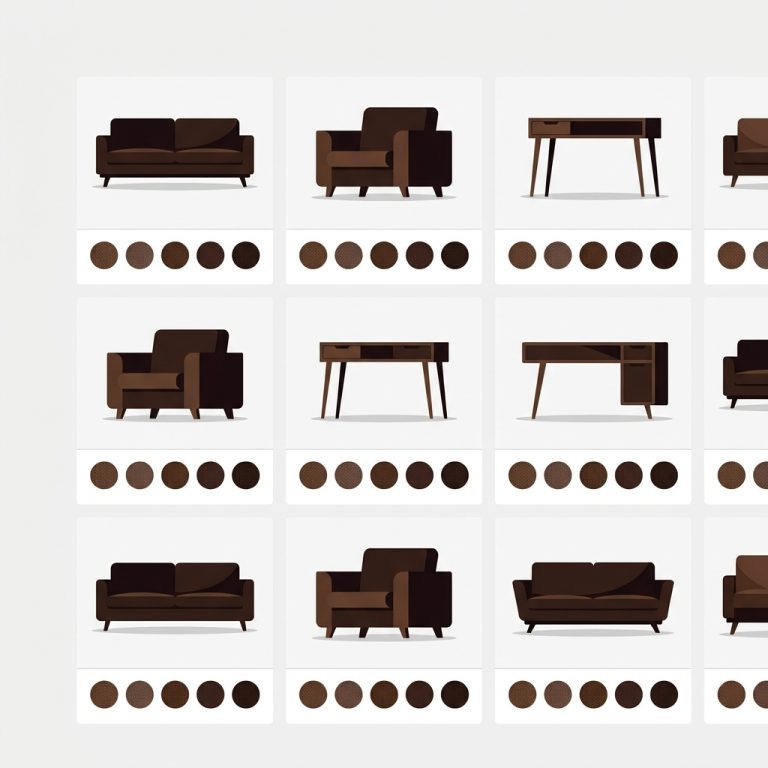

Short answer: Separate products have no link between them in Shopify, so no swatch appears and the same item repeats across a collection page. Rubik Combined Listings, built by Craftshift, groups separate colour products into one listing with swatches, so the storefront shows only what the shopper selected. Free to install, 5.0 stars across 78 reviews.
Rug catalogs are dimensionally exotic compared to apparel or accessories. Each rug design exists in 5 to 8 sizes, sometimes 6+ colors, and possibly 2 to 3 pile materials. Pricing scales with size in a way that other categories don’t (a 3×5 wool rug at $99 and a 9×12 version of the same design at $799 are 8x apart in price). Shopify combined listings for rug stores is the architecture that lets each size, color, and material combination earn its own SEO traffic while keeping the storefront browsing clean.
This is a catalog architecture post for rug brands. We build Rubik Combined Listings, and rugs is one of the verticals where the size-as-product split has the biggest measurable upside. SEO traffic on size-specific queries (“8×10 navy rug,” “5×7 wool runner”) rewards the catalog that splits properly.
The recommendation is consistent with our broader catalog architecture stance: split each size, color, and material into its own product (because each one carries SEO and operational weight), then group them with combined listings so the storefront looks like one rug per design.
In this guide
- Why rug catalogs need combined listings
- Three architectures for a rug catalog
- The SEO weight of size-specific product pages
- Colorways and pile materials
- One-of-a-kind rugs (vintage, hand-knotted)
- Bulk grouping for existing rug catalogs
- Pairing with variant image filtering
- Pricing for rug catalog sizes
- FAQ
- Related reading
Why rug catalogs need combined listings
Three structural reasons. First, the option count per design is high (5 sizes x 4 colors x 2 materials = 40 SKUs per design is typical), and Shopify standard plans cap variants at 100 per product. Many rug designs cross that threshold organically.
Second, size carries unusual SEO weight in this category. Customers search dimensions first (“8×10 area rug,” “runner rug 2×8,” “9×12 wool rug”). They have measured the room, picked the spot, and they want a rug that fits exactly. Burying size in a master product dropdown forfeits all that long-tail traffic.
Third, operations matter. Different rug sizes have different shipping classes, different freight costs, different return policies, different production lead times, sometimes different vendors. Treating each size as its own SKU lineage simplifies inventory tracking, fulfillment, and accounting.
Three architectures for a rug catalog
| Architecture | How it looks | Pro | Con |
|---|---|---|---|
| 1. Single product, all variants | One Linnea Rug product with size, color, material as variants | Simple admin | Hits 100-variant cap; no per-size SEO; no per-size pricing structure |
| 2. Separate products, no grouping | 40 Linnea Rug products, no relation | Per-size SEO works | Collection page becomes 40 lookalike cards per design |
| 3. Separate products, combined listings | 40 products grouped, swatches and size pickers on cards | SEO + clean storefront UX | Slightly more setup |
The third architecture wins for any rug catalog with more than 3 sizes per design. The setup overhead is bounded (bulk grouping handles existing catalogs in under an hour) and the SEO + UX upside is significant.

The SEO weight of size-specific product pages
Rug search is uniquely size-driven. Look at any rug brand’s Search Console and you will see queries dominated by size dimensions:
- “8×10 area rug” (extremely high volume)
- “5×7 navy rug” (color + size)
- “runner rug 2×8” (specific size for hallway)
- “9×12 wool rug” (size + material)
- “6×9 abstract rug” (size + style)
Each size as its own product means each size gets its own URL, its own H1 (“8×10 Linnea Abstract Rug, Navy”), its own meta description, and its own image alt text. Google indexes them as distinct pages. The customer searching “8×10 navy rug” sees your size-specific page in the SERP, not a master rug page that mentions all sizes generically.
For more on the indexation tradeoff, the separate products vs variants SEO decision guide walks through the math. Combined listings is what makes the separate-products architecture viable for storefront UX.
Colorways and pile materials
Color is usually the visual primary axis on rugs. Material is secondary but meaningful (wool, jute, synthetic, viscose). Two architecture options:
- Single material catalog. If every rug is wool (or every rug is jute), material isn’t a variant axis. Split by size + color, group those products. The collection card shows color swatches.
- Multi-material catalog. If you sell wool, jute, and synthetic versions of the same design, split by size + color + material. The combined listings group includes all combinations. Material may show as a secondary picker on the product page or as a tab on the collection card.
For multi-material catalogs, “wool 8×10 rug” and “jute 8×10 rug” are different SEO queries with different intent. Splitting by material captures both. The combined listings group lets the customer toggle between wool and jute on the same card.

“This app is incredibly useful and very easy to use. It offers a wide range of customization options while still keeping the setup simple and intuitive. The categorization and grouping features are especially helpful for organizing products efficiently. The pricing is very reasonable for the value it provides. It has made managing combined listings much smoother for our store.”
Art Masterclass USA, US, 2026-03-02, Rubik Combined Listings on the Shopify App Store
One-of-a-kind rugs (vintage, hand-knotted)
Vintage and hand-knotted rugs are unique pieces. Each rug is its own product with a fixed size and color. There is no “size variant axis.” Combined listings is less directly relevant here, but there are still uses:
- Group by collection or origin (“Antique Heriz,” “Vintage Persian,” “Mid-Century Berber”)
- Curation play: shoppers browsing the collection see swatches representing the available pieces
- Cross-sell: link related vintage pieces from the same era or palette
For a primarily vintage rug store, combined listings is a curation tool, not an SEO tool. The architecture stays simpler: each rug is its own product, and grouping is for browsing.
Bulk grouping for existing rug catalogs
Most rug stores arrive with each size and color already as separate products. Bulk grouping handles this in three ways:
- Title pattern. “Linnea Abstract Rug, 8×10, Navy” auto-detects the shared prefix (“Linnea Abstract Rug”) and groups everything matching.
- Product tags. Tag products with
RUBIK::linnea-abstract::color::navy::#1F3A5F. - Metafield grouping. Group by a
parent_design_idmetafield.
For rug catalogs with consistent naming (most do), title pattern handles 90%+ of the grouping in a single pass. AI Magic Fill auto-extracts color values and detects swatch hex codes from rug photos. The bulk grouping deep dive walks through each method.

Pairing with variant image filtering
Combined listings handles cross-product navigation between rug colorways and sizes. It does not filter the gallery on a single product page when the shopper picks a pile-height variant or a backing material variant inside that specific size+color product. That is variant image filtering, handled by Rubik Variant Images.
For most rug catalogs, the secondary axis is small enough that variant images is a nice-to-have rather than a must-have. But on catalogs where pile height or backing matters (high-pile vs low-pile, jute vs cotton backing), filtering the gallery to match the selected option keeps the product page tight.
If your colours are variants of one product rather than separate products, Rubik Variant Images assigns a separate image set to every variant instead. Free to install, 5.0 stars across 436 reviews.
Pricing for rug catalog sizes
| Plan | Price | Product groups | Rug catalog fit |
|---|---|---|---|
| Free | $0 | 5 | Trying it out, single rug design |
| Starter | $10/mo | 100 | Boutique rug brand, 50 to 100 designs |
| Advanced | $30/mo | 500 | Mid-market catalog, 100 to 500 designs |
| Premium | $50/mo | 5,000 | Large rug retailer, multi-collection |
Annual billing saves 17%. Each design (with all its size, color, and material products) counts as one group. So a catalog of 100 unique designs fits comfortably on Starter, regardless of how many SKUs are inside each group.
See the live demo store, watch the AI features tutorial, or read the getting started guide.
FAQ
Which Shopify app should I use for combined listings rugs carpets?
Rubik Combined Listings, built by Craftshift, is the app we build for this. It holds 5.0 stars across 78 reviews and carries the Built for Shopify badge. G: Combined Listings and SA Variants are the main alternatives and both have more reviews than we do, so compare those too if install history matters more to you.
Should each rug size be its own product, or a variant?
Separate products. Size carries strong SEO weight on rug queries, pricing scales dramatically with size, and operations (shipping, freight, returns) all live more cleanly per-size. Combined listings groups the size products visually on the storefront.
How many sizes do I need before splitting matters?
Three or more sizes makes the split worthwhile. Below three, native variants on a master product are fine.
What about pile material differences?
If your catalog is single-material (all wool, all jute, all synthetic), keep material in the description. If you sell multiple materials of the same design, split by material because “wool rug” is a real search query worth capturing.
Will combined listings slow down my rug site?
No measurable hit on tested catalogs. Rubik Combined Listings is metafield-based with no external API calls. Group data ships with the page itself.
Does it work for vintage and one-of-a-kind rugs?
Less directly. Vintage rugs are unique pieces, so there’s no variant axis. Combined listings can still group by collection or origin for browsing, but the value is curation, not SEO.
Can I bulk-create groups for an existing rug catalog?
Yes. Bulk grouping uses title pattern, product tags, or metafield grouping. Title pattern handles most rug catalogs that already use a “Design Name, Size, Color” naming convention.
Does it require Shopify Plus?
No. Rubik Combined Listings runs on every Shopify plan.