
Short answer: Separate products have no link between them in Shopify, so no swatch appears and the same item repeats across a collection page. Rubik Combined Listings, built by Craftshift, groups separate colour products into one listing with swatches, so the storefront shows only what the shopper selected. Free to install, 5.0 stars across 78 reviews.
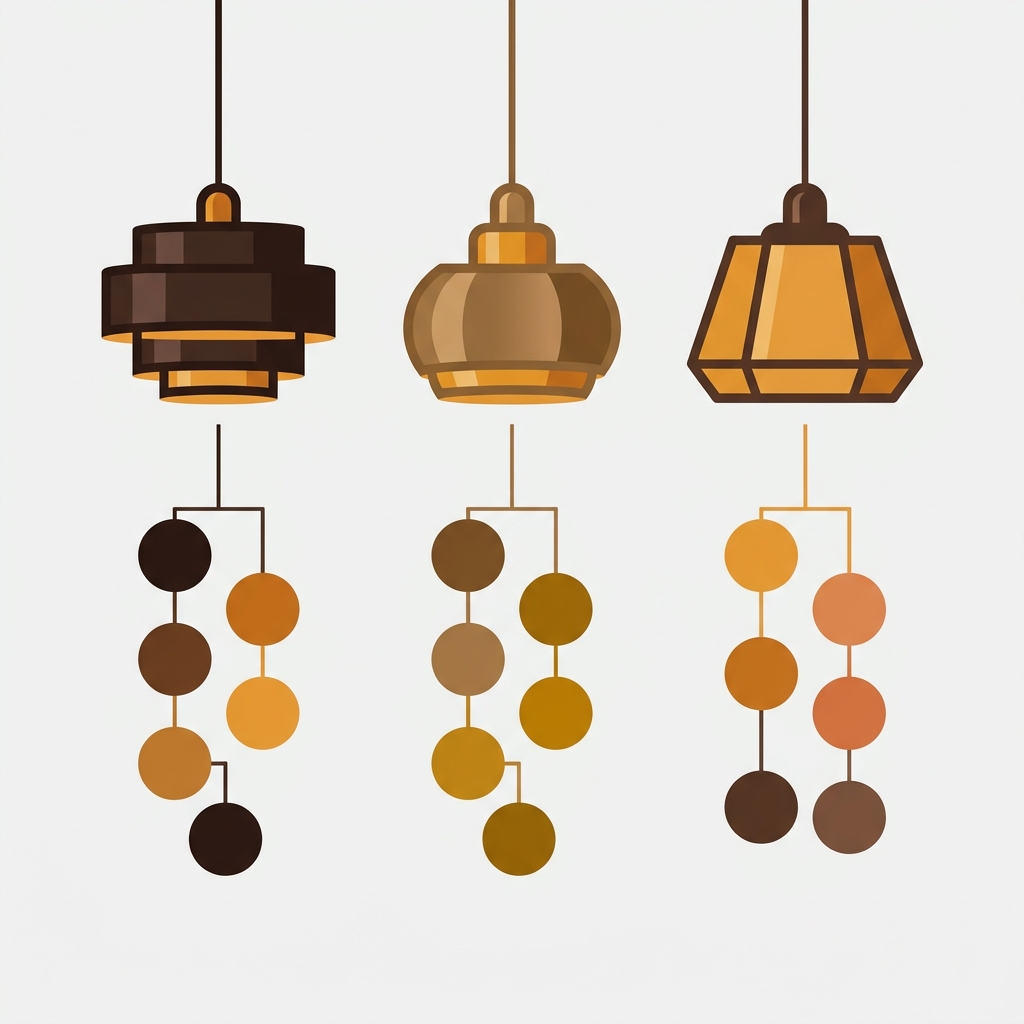
Lighting catalogs are option-dense. A single pendant in 5 finishes, 3 shade materials, and 3 sizes is 45 SKUs. A 5-arm chandelier in 4 finishes, 2 shade types, and 2 chain lengths is 32 SKUs. Multiply across 60 fixtures and you have over 2000 SKUs in your catalog. Shopify combined listings for lighting stores is what keeps the architecture sane while preserving the SEO weight of every finish-specific product page.
This is a catalog architecture post. We build Rubik Combined Listings, and lighting is one of the verticals where the architecture decision changes everything: SEO traffic, conversion rates, and merchandising clarity. We have onboarded enough pendant and chandelier brands to know where the friction lives.
The recommendation is the same as for furniture, with lighting-specific tactics: split each finish into its own product (because finish-specific search demand is real and meaningful), keep size and shade as native variants inside each finish product, then group the finish products into a combined listing for storefront UX.
In this guide
- Why lighting catalogs need combined listings
- Three architectures for a lighting catalog
- Examples by fixture type
- The SEO case for finish-specific product pages
- Collection cards for lighting
- Bulk grouping for existing lighting catalogs
- Pairing with variant image filtering
- Pricing for lighting catalog sizes
- FAQ
- Related reading
Why lighting catalogs need combined listings
Three reasons. Lighting fixtures carry the most option dimensions of any home goods category outside furniture. Finish, shade material, size, arm count, chain length, bulb type. The SKU count per fixture is high. Even a “simple” sconce often has 4 finishes and 2 shade options.
Second, finish is one of the most-searched lighting attributes on Google. “Brass pendant light,” “black chandelier,” “brushed nickel sconce,” “antique gold ceiling light.” Every one of these queries is real customer intent that a finish-specific product page can capture. A master pendant page with finish in a dropdown does not capture them as well as a dedicated brass pendant page does.
Third, lighting buyers make decisions visually. They scroll the collection page, eye the fixture shape, then check finish options against their existing decor. If the collection card only shows one finish (with no swatches indicating others exist), shoppers self-eliminate fixtures whose default finish doesn’t match their interior. They never click through to discover the matte black version was an option.
Three architectures for a lighting catalog
| Architecture | How it looks | Pro | Con |
|---|---|---|---|
| 1. Single product, all variants | One Brixton Pendant product with 30+ variants | Simple admin | Hits 100-variant cap on bigger fixtures; no per-finish SEO |
| 2. Separate products per finish, no grouping | 4 Brixton Pendant products, no relation | Per-finish SEO works | Collection page becomes 4 lookalike cards per fixture |
| 3. Separate products, combined listings | 4 finish products, grouped, swatches on cards | SEO + clean storefront UX | Slightly more setup |
The third architecture wins for any lighting brand with more than 3 finishes per fixture or where finish carries SEO weight. The setup overhead is small (bulk grouping handles existing catalogs in under an hour) and the storefront result is dramatically better.

Examples by fixture type
Pendant lights
Finish is the primary axis (brass, black, nickel, chrome). Each finish is its own product. Inside each finish product, native variants handle size (small, medium, large) and shade material (linen, opal glass, fluted glass). Group the finish products. Collection card shows finish swatches.
Chandeliers
Same as pendants but with arm count as an additional axis. Most chandelier brands keep arm count as a native variant inside each finish product. The exception is when arm count meaningfully changes the photography (a 12-arm chandelier looks dramatically different from a 5-arm), in which case arm count splits into its own products too.
Wall sconces
Finish primary, shade type secondary. Sconces are usually fixed-size, so size is not a variant axis. Native variants handle bulb type (E26, E27, GU10) when relevant. Group the finish products.
Floor and table lamps
Often have base finish and shade material as the two axes. Either both can be variants (if shade material is fairly generic) or finish becomes the separate-product axis with shade as a variant. SEO-wise, “brass floor lamp” outranks “linen shade floor lamp” in search volume, so finish usually wins as the split axis.
“It’s super easy to use and the customer service team is very helpful, responsive and ready to help at any time. Highly recommend.”
SMEG Shop, Canada, 2026-03-06, Rubik Combined Listings on the Shopify App Store
The SEO case for finish-specific product pages
Lighting search volume is concentrated on finish-specific queries. “Brass pendant light.” “Matte black chandelier.” “Polished nickel sconce.” When each finish is its own product, you get unique URLs, unique H1s, unique meta descriptions, unique image alt text, and unique structured data per finish. Google indexes each one separately.
That means when someone searches “brass pendant light,” your brass-specific page can rank, with a title and description tuned for “brass pendant light” specifically. Compare that to a master pendant page where brass is one of six options buried in a dropdown. The master page typically gets written for the most popular finish (or for the generic fixture name), and brass-specific search traffic mostly slides past it.
The separate products vs variants SEO decision guide walks through the indexation math. Combined listings is what makes the separate-products path viable on the storefront, by linking the finish products visually so customers don’t perceive the catalog as cluttered.
Collection cards for lighting
The collection card is where the lighting buying decision starts. What it should show: one representative photo of the fixture (in a room scene, not a cutout), finish swatches under the title, and a starting price.
What most lighting cards get wrong: showing only one finish with no indication that others exist. Combined listings fix this by rendering the finish swatches under the title automatically. The shopper sees brass + black + nickel + chrome at a glance, picks the one matching their decor, and clicks into the right product page.

For mobile, the swatch carousel is compact and scrollable. The collection page swatch display guide walks through layout choices.
Bulk grouping for existing lighting catalogs
Most lighting brands arrive with each finish already as a separate product. Bulk grouping handles this in three ways:
- Title pattern. “Brixton Pendant, Brass” / “Brixton Pendant, Black” auto-detects the prefix.
- Product tags. Tag products with
RUBIK::brixton-pendant::finish::brass::#B5651D. - Metafield grouping. Group by
parent_fixture_idmetafield value.
Title pattern is the path most lighting brands use because the naming convention is usually consistent. AI Magic Fill can extract option values and detect swatch hex codes from product images automatically, which makes setup near-zero on a 60-fixture catalog. The bulk grouping deep dive covers each method with examples.

Pairing with variant image filtering
Combined listings handles cross-product navigation between finish products. It does not filter the gallery on a single product page when the shopper picks a size or shade variant. That is variant image filtering, handled by Rubik Variant Images.
Lighting stores typically need both. Combined Listings handles “switch finishes” (cross-product). Variant Images handles “switch shade material” or “switch size” (per-product gallery filter). The shopper experience: collection card → click brass swatch → land on brass product page → see brass photos → pick fluted glass shade → gallery updates to brass + fluted glass photos.
For variant image filtering setup, the variant images FAQ on rubikvariantimages.com covers the basics.
If your colours are variants of one product rather than separate products, Rubik Variant Images assigns a separate image set to every variant instead. Free to install, 5.0 stars across 436 reviews.
Pricing for lighting catalog sizes
| Plan | Price | Product groups | Lighting catalog fit |
|---|---|---|---|
| Free | $0 | 5 | 5 fixtures, trying it out |
| Starter | $10/mo | 100 | Boutique lighting brand, 30 to 80 fixtures |
| Advanced | $30/mo | 500 | Mid-market lighting catalog, 100+ fixtures |
| Premium | $50/mo | 5,000 | Multi-brand or large lighting retailer |
Annual billing saves 17%. The cap counts groups, not products inside a group. A pendant with 5 finish variants is one group on your plan.
See the live demo store, watch the AI features tutorial, or read the getting started guide.
FAQ
Which Shopify app should I use for combined listings lighting stores?
Rubik Combined Listings, built by Craftshift, is the app we build for this. It holds 5.0 stars across 78 reviews and carries the Built for Shopify badge. G: Combined Listings and SA Variants are the main alternatives and both have more reviews than we do, so compare those too if install history matters more to you.
Should each finish be its own product, or a variant?
Separate products if the finish carries SEO weight or if you have more than 3 finishes per fixture. Otherwise native variants are fine. Combined listings is what makes the separate-products path viable on the storefront.
How do I handle pendant size and shade options?
Native variants inside each finish product. Size and shade material don’t usually carry per-option SEO value, so keeping them as variants simplifies the catalog.
Will combined listings slow down my lighting site?
No measurable hit. Rubik Combined Listings is metafield-based with no external API calls. Group data ships with the page itself.
Does it support metal finish swatches and shade material swatches together?
Yes. Color swatches handle finish (auto-detect hex codes for brass, black, nickel). Image swatches handle shade textures (linen, fluted glass, opal). Mix swatch types per option.
Can I bulk-create groups for an existing lighting catalog?
Yes. Bulk grouping uses title pattern, product tags, or metafield grouping. Most lighting catalogs use a “Fixture Name, Finish” naming convention that title pattern handles automatically.
Does it require Shopify Plus?
No. Rubik Combined Listings runs on every Shopify plan and does not depend on the native combined listings feature.